


Volatus expands Canadian drone production amid defence push
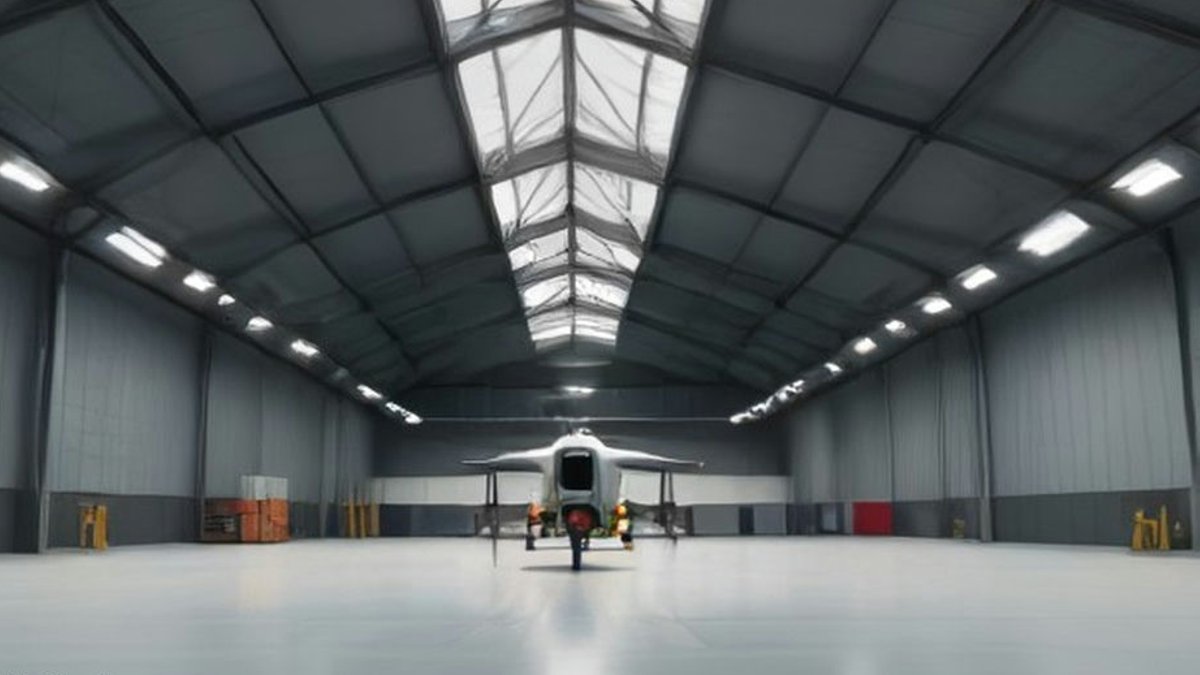
Inside a bright, cavernous hall at Mirabel Airport, a single technician works under high overhead lights on a new drone frame. The space is part of Volatus Aerospace Inc.’s 50,000-square-foot headquarters, the company’s largest manufacturing site to date.
Glen Lynch, chief executive of Volatus, said that the facility is all about the company’s expansion. He linked the expansion directly to Ottawa’s recent shift in defence procurement policy, from a conference room that overlooks the production line.
Over the past five years, Volatus built a market value of roughly $315 million by operating thousands of kilometres of drone-based surveillance on North-American utility lines and pipelines, from British Columbia to Texas.
Government push fuels domestic drone push
In February, the federal Defence Industrial Strategy announced a “Buy Canadian” principle, designating domestic firms as anchor customers for specific defence projects. The strategy aims to replace foreign-sourced equipment with home-grown alternatives.
The 2024 federal budget earmarked $2.3 billion over five years to move promising Canadian drone concepts through testing and into production.
Drones present a low entry barrier compared with submarines or fighter jets. A company with a 3D printer can theoretically design and build a basic airframe without the massive infrastructure required for larger platforms.
Ottawa’s goal is sovereign capability: domestic firms should be able to build, repair and upgrade drone systems without relying on foreign suppliers.
Volatus eyes mass production
In July, the Defence Drone Initiative created a pre-qualified list of suppliers to speed up military procurements. Companies can join the list each quarter, and hundreds already appear on it.
Volatus secured a September contract to provide up to 5,000 low-cost tactical-intelligence drones for $25 million, contingent on delivering an initial batch of 100 units that meet performance criteria.
Glen Lynch describes Volatus as a “platform” rather than a traditional manufacturer. The firm plans to outsource the first 100 drones to a United Kingdom partner while it builds domestic capacity at Mirabel.
Lynch said that products are temporary, noting that hardware and software cycles can change within weeks.
Related Post: THEON pushes for deeper European defence integration through joint procurement
The Business Development Bank of Canada is advising the company on automation strategies.
While Volatus focuses on scaling, other Canadian firms are still emerging from garage-level operations. For example, Beonyx Robotics in Saguenay produces all-terrain land drones for ski resorts and recently began supplying the military for snow-bound missions.
Supply-chain resilience remains a challenge. Companies must maintain production capacity during peacetime and be ready to pivot to new technologies when conflicts arise.
Kevin Thériault of CAE Inc. highlighted that drones rely on a broader ecosystem, including communications, data transfer and battery technology. Building that ecosystem will require investments beyond the airframes themselves.
Volatus’ proprietary V-Cortex system claims to keep drones on course even after losing a signal, a feature that could be valuable for operations in the Arctic where connectivity is sparse.
The Vaughan, Ont., office coordinates remote flights across North America, covering pipelines from western British Columbia to Texas.
Industry funding pathways
Draganfly highlighted its historic drone, recognized for a life-saving mission in 2013, as a platform for modern military upgrades.
The company is adapting the design to incorporate newer sensor suites and data-link modules.
Its leadership emphasized that recent foreign investment sparked scrutiny, yet the firm maintains that Canadian ownership remains central to its defence strategy.
Analysts note that hardware margins are modest, while software updates generate recurring revenue streams.


