


Bears invade Romanian city streets
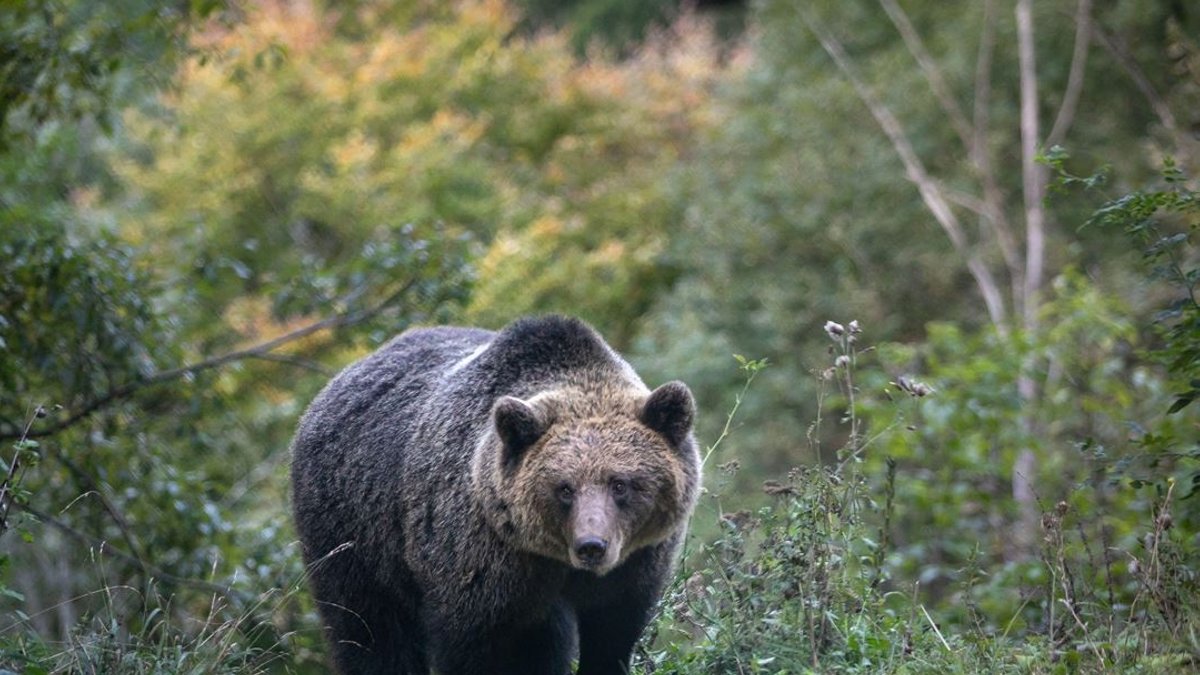
As Brașov’s deputy mayor, Dan Ghiță receives daily alerts about brown bears moving into urban areas. The city of roughly 250,000 residents, located at the foot of the Carpathians, frequently confronts encounters with these animals, a species deeply tied to the region’s identity.
Recently, these large omnivorous mammals have been making their way into urban areas, lured by accessible food waste and venturing into populated neighborhoods, streets, gardens, and accommodations. According to Ghiță, the city logged 577 emergency calls related to bears by October.
While the Romanian Gendarmerie typically handles bear dispersal, the city had to call in Ghiță’s team over 70 times this year. Throughout 2026, 48 incidents concluded with bears being driven off using sirens or noise devices, whereas 11 cases involved sedation, tagging with microchips, and relocation.
Ghiță approved the elimination of bears on 15 separate occasions, citing escalating bear-related pressures in the city as their numbers have risen in recent years. Approximately 110 bears inhabit the region, though government scientists estimate the local forests can sustain only around 20.
Romania Hosts Largest Bear Population
Romania hosts the largest brown bear population in Europe, comprising about 60% of the EU’s total. Though numbers have increased due to conservation initiatives, this density has led to more frequent conflicts with humans.
Between June and the preceding five years, bear encounters resulted in 14 fatalities and 150 serious injuries, as reported by the Romanian environmental ministry. As a top predator, Ursus arctos has long inhabited the Carpathians and holds cultural significance in the nation’s folklore.
Over the past century, bear populations have experienced major shifts, declining to near extinction during World War II and recovering to roughly 7,500 during Nicolae Ceaușescu’s regime. Upon joining the EU in 2007, Romania was required to classify bears as ‘strictly protected’ under the Habitats Directive.
Read Also: THEON pushes for deeper European defence integration through joint procurement
A study published in August 2026 by a team of researchers found that the population continued to grow, reaching nearly 9,000 bears around 2024. However, another study based on genetic data by the National Forestry Research Institute found that the population was between 10,419 and 12,770 brown bears, significantly higher than previously believed.
The figures themselves have become a political issue, with some conservationists arguing that the government’s counting methods inflate the numbers, exaggerating the threat to the public. Blaming the growing bear population for the increase in attacks, the Romanian government doubled the annual quota for preventative hunting to 969.
Government Seeks Lower Protection Status
Environment Minister Barna Tánczos wants to go a step further, urging the EU to lower the brown bear’s protection status under the Habitats Directive. Despite benefitting from a protected status, in 2021, the government passed a decree handing mayors or a deputy mayor the power to order bear culls.
Alex Gridan, a researcher at the National Forestry Research Institute, said, “If there is no social tolerance or economic value, then eventually the bear will disappear.” For some, the kill quotas gave hunters more power to protect people from bear attacks.
Mihaela Faur, a researcher with Fauna and Flora, said, “You can’t do management well without hunters to help us,” said Mihaela Faur, a researcher with Fauna and Flora, an environmental group that works on bear-human coexistence in the Carpathian Mountains. “You need the hunters on board.”
The debate over how to manage bears locally has reached Brussels, with Romania pushing the EU to weaken protections for brown bears.
In June, Romania’s environmental minister Barna Tánczos asked fellow ministers at the EU’s Agriculture and Fisheries Council to consider replacing the case-by-case exemptions for problem bears with “a permanent management regime similar to that applicable under Annex V” of the Habitats Directive.
Read Also: Hungary’s opposition wins landslide after Orbán’s eight-year rule
Tánczos said that Romania faces a drastically different situation from countries like Germany, Spain, or France, where bear populations are relatively small and concentrated in isolated areas. Back in Brașov City Hall, Ghiță said his team tried to avoid killing bears where possible, and that his priority was to keep people safe.
Finding Ways to Coexist with Bears
He said, “We go to keep the people safe, and if this is impossible, we take the extreme measure.” The city of Băile Tușnad, one of the smallest towns in Romania, has seen success in reducing bear encounters through the use of bear-resistant trash cans and electrical fencing.
Mayor Zsolt Butyka said that the town’s success in bringing down bear pressure also changed the conversation about management of the species. Instead of shooting the bears, the question became how to live with them. There were 237 emergency calls in Băile Tușnad in 2021, but only 14 so far in 2026, according to Butyka.
Cristina Lapis, who founded the Libearty Bear sanctuary, said, “If there were no people to give them food, to leave out the trash, they wouldn’t come into contact with humans,” she said. Codrut Feher and Claudiu Dumitriu, organizers with Alliance Against Abuses Association, argue that the city needs to do more to reduce the amount of trash that’s attracting the animals into urban areas.
Local authorities from Brașov point to bear-proof measures, such as police checking public garbage containers every evening and having a special garbage collection service on call to take any trash at night. However, Feher and Dumitriu pointed to multiple garbage containers full of trash near the forest, saying that more funding needed to go towards coexistence instead.
Feher said, “The huge campaign that the bear is the greatest threat to Romania is completely fabricated.” Human-bear conflicts are on the rise in towns, due to deforestation, urban sprawl, tourism, and habitat invasion, according to researchers at the University of Timişoara.


