


EU budget talks stall as Spain digs in
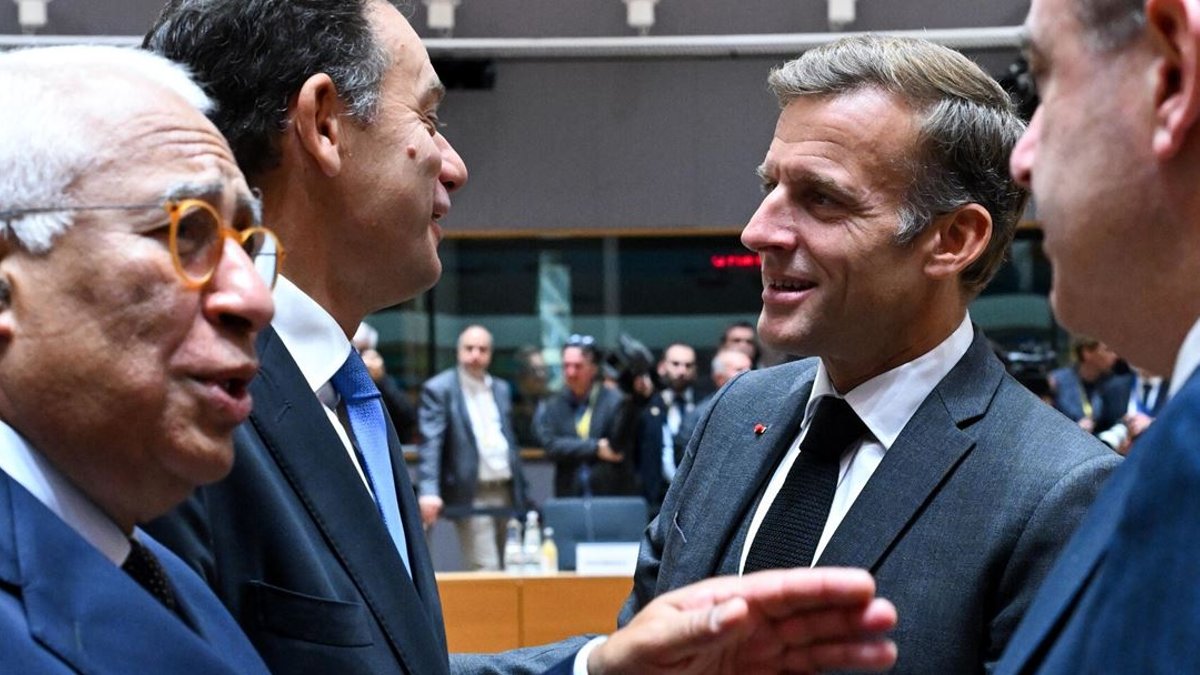
The European Union’s next seven-year budget, worth up to €2 trillion, remains unresolved as leaders gather in Brussels without a deal. Member states continue to clash over spending levels and new funding sources, despite the Multiannual Financial Framework (MFF) for 2028–2034 having been proposed last July by the European Commission. Negotiations have stalled, further complicated by upcoming elections in several key countries, adding urgency to the impasse.
Officially, EU leaders have until the end of 2027 to reach an agreement, but political pressure has intensified demands to finalize talks by December 2026. The Irish Presidency attempted to break the deadlock in October by reducing the proposed budget from €2 trillion to €1.6 trillion. However, even this revised figure has not secured broad support. The Friends of Cohesion group, led by Italy and Romania, has warned that deeper cuts would undermine the EU’s capacity to address climate disasters, economic disparities, and defense needs.
Spain’s position has become contentious. For the first time, it will act as a net contributor to the EU budget, a shift that grants Madrid significant leverage but also imposes new obligations. The government has drawn firm boundaries around funding for agriculture and cohesion policy, arguing that reductions in these areas would exacerbate regional inequalities. Spain has proposed restructuring €11 billion in annual debt repayments from the NextGenerationEU debt to redirect funds toward other priorities.
Despite its economic growth outperforming much of Europe, Spain faces mounting challenges, including rising living costs, a severe housing crisis, and political instability ahead of snap elections scheduled for November 29. Economy Minister Carlos Cuerpo has made it clear that Madrid will not compromise on its demands, stating that negotiations will persist “until the very last minute.” While officials acknowledge that the election outcome could introduce further complications, they insist Spain’s core positions will remain unchanged.
France, the bloc’s most vocal proponent of new EU-wide taxes, views levies on carbon, tobacco, and digital services as essential to avoiding deeper budget cuts. The Commission’s proposal, expected to generate €58.5 billion annually, has encountered strong opposition. Many governments regard these taxes as either economically damaging or a thinly veiled attempt to increase Brussels’ revenue. France also opposes allocating EU funds to return hubs for processing irregular migrants, aligning it with Spain on this issue.
The political stakes in France are unusually high due to the upcoming 2024 presidential election, where the far-right National Rally holds a poll lead. Its candidate, Marine Le Pen, has pledged to halve France’s EU contributions. Italy, a major recipient of cohesion and agricultural funding, has actively defended these budgets, warning that reductions would be politically explosive ahead of its own 2024 elections. The country has already received €42.2 billion in cohesion funds between 2021 and 2027.
Adding to the grim pressure, Italy is estimated to have already spent more than €2 billion on energy subsidies alone since March, when the US-Israeli war with Iran began. Prime Minister Giorgia Meloni’s government has also demanded greater fiscal flexibility to manage its deficit, though Brussels has rejected these requests. Germany, the EU’s largest net contributor, remains firmly opposed to any budget exceeding €1.6 trillion, viewing the Irish proposal as still too high.
Chancellor Friedrich Merz has linked the negotiations to domestic politics, cautioning that higher contributions could strengthen support for the far-right Alternative für Deutschland (AfD), which is gaining traction in polls. This stance reflects broader concerns among frugal nations—including the Netherlands, Sweden, Denmark, Finland, and Austria—that the EU must prioritize efficiency over increased spending. Poland has rejected new EU taxes, particularly those diverting carbon market revenues, fearing they would harm its energy-intensive industries during the transition away from fossil fuels.
Romania, co-leading the Friends of Cohesion group with Italy, has emphasized that any budget agreement must preserve agricultural and regional funding. The country’s political stability remains fragile, having only recently resolved a five-month government formation crisis. Finland, which shares a 1,340-kilometer border with Russia, has insisted that defense and border security spending be protected from cuts, citing heightened security risks.
Lithuania, set to assume the EU’s rotating presidency in July 2025, has similarly called for increased defense funding to counter Russian aggression. The next critical step rests with Ireland, whose presidency is seeking a compromise. However, with elections approaching in half a dozen member states, political risks are escalating. The December summit now appears unlikely to produce an agreement, leaving the EU’s long-term finances—and its ability to act on climate, defense, and migration—in an uncertain state.
The Friends of Cohesion group has intensified pressure on negotiators by insisting that any budget deal must uphold the €1.6 trillion Irish proposal while shielding agricultural and cohesion funds from further reductions. Their joint declaration states that deeper cuts would weaken the EU’s ability to address climate adaptation, regional inequality, and defense modernization, all of which are already strained by rising migration pressures and energy market volatility.
The group has also advocated for equal application of new EU-wide taxes, arguing that wealthier nations should not bear a disproportionate share while poorer regions face funding shortfalls. Romania, now led by Prime Minister-designate Luca Niculescu following the resolution of its five-month government formation crisis, has framed the budget negotiations as a test of EU solidarity. With its economy still recovering from the pandemic and facing high public deficits, Bucharest has tied its support for the MFF to assurances that NextGenerationEU repayments, due to begin in 2028, will be delayed or restructured.
The country’s national and regional partnership plans, which allocate EU funds for infrastructure and rural development, remain a priority, with officials warning that any erosion of these budgets could spark social unrest in underdeveloped areas. Finland’s demands reflect its 1,340-kilometer border with Russia, where security concerns have overshadowed fiscal debates. Prime Minister Petteri Orpo has insisted that defense and border management spending must be protected from cuts, arguing that the EU’s eastern flank requires sustained investment to counter hybrid threats, including daily drone incursions and coordinated migrant flows from Belarus.
Helsinki has also resisted proposals to reduce funding for research and new technologies, warning that such cuts would undermine its economic competitiveness in a post-pandemic economy. Lithuania, the highest per capita defense spender in NATO at 5.38% of GDP, has framed the budget negotiations as a matter of national survival. The country has faced daily hybrid attacks, including drone strikes and disinformation campaigns, while its migration control efforts along the Belarus border have strained resources.
Vilnius has rejected any suggestion of scaling back EU defense allocations, instead calling for additional funding to strengthen cybersecurity and rapid-reaction forces. The Lithuanian presidency, beginning in mid-2025, will likely prioritize defense-focused compromises, though its success depends on whether Germany and the Netherlands, both skeptical of increased spending, remain open to concessions. The failure of the December summit to reach an agreement has left the EU’s financial future in limbo, with elections in France, Italy, and Poland adding urgency to the deadlock.
While Ireland’s presidency continues to push for a compromise, the political risks, including a potential far-right victory in France, have made a breakthrough unlikely. The next critical phase will be Lithuania’s presidency, where defense and migration will dominate the agenda. However, without a resolution on funding, the EU’s long-term stability remains uncertain. The 2027 deadline for finalizing the MFF approaches, but with no consensus in sight, the bloc’s ability to address its core priorities faces significant challenges.


