


Romania struggles as new PM fails to form coalition
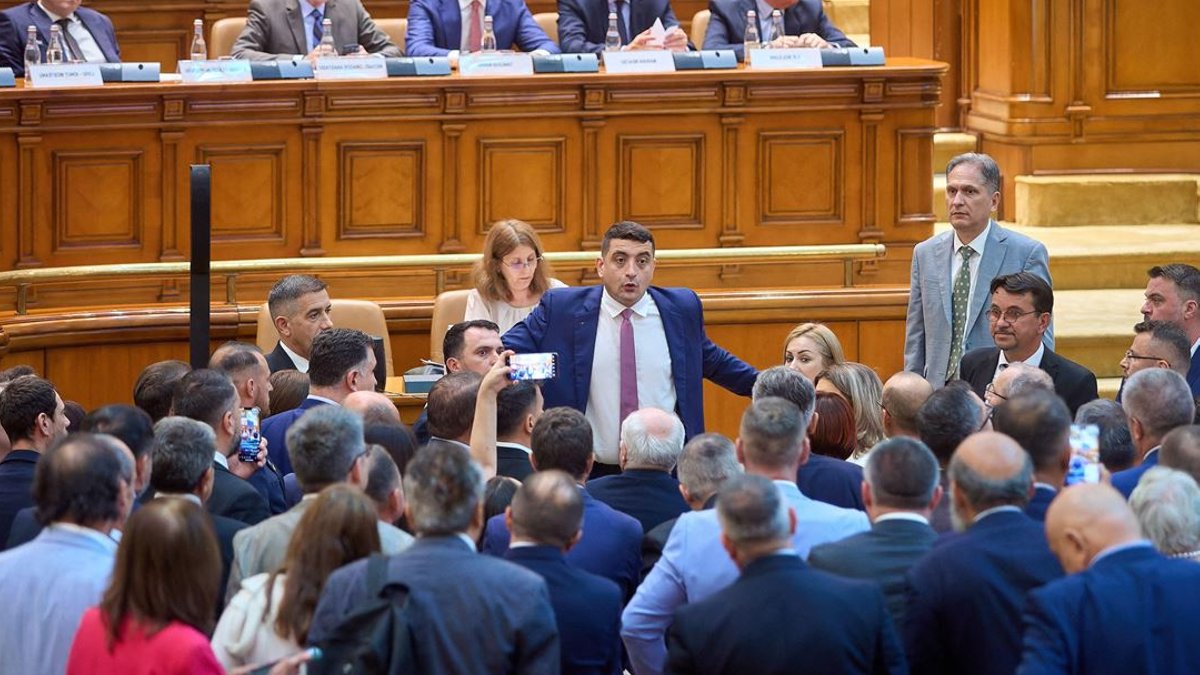
Romania moves into the fifth month without a governing coalition after the centre-right administration fell in May. Since that collapse, multiple nominees for prime minister have been unable to assemble a cabinet, while the nation confronts its sharpest economic downturn in recent years and one of the EU’s heftiest budget shortfalls. President Nicușor Dan faces mounting calls to either secure a leader capable of forming a government or to trigger early national elections.
A sharp economic downturn
On Monday, Dan appointed a fourth candidate, former journalist and ambassador to France Luca Niculescu, who has 10 days to get enough votes to form a government. The PSD and AUR have repeatedly rejected the candidates. Simion said that there was “no chance” his party would support Dan’s latest candidate if AUR was not included in the government, and called for snap elections instead.
In the months since the government’s fall, Romania has been hit by a series of economic and energy crises. As interest rates rise, the Romanian lei continues to weaken against the euro and low river depths forced hydropower and nuclear plants offline this summer. In 2025, Romania had the highest deficit in the EU at 7.9% of GDP, while growth slowed significantly to less than 1%. The rating agency S&P gave the country a BBB- sovereign debt rating in October, with a negative outlook. Another drop in ratings would push the debt into junk status, increasing interest rates.
Dan said last week that he doesn’t want to hold snap elections nor include the AUR in a possible government because it could further spook international creditors, telling reporters it was important for the country to have a “financially stable trajectory without turbulence.” Barna Tánczos, deputy prime minister and acting Minister of the Environment agreed, saying that new elections would only further destabilize Romania’s economic situation.
“Elections are not a solution,” he told The Parliament. “As soon as possible we need a new government and new economic measures to stabilize our finances.” He said that if the current budget wasn’t modified and the budget for 2027 prepared soon, Romania would risk further spooking creditors and driving up interest rates.
An opportunity for the right
MEP Siegfried Mureşan (EPP, RO), the most recent candidate who failed to form a government, said that a coalition was still possible, if it includes a clear commitment to further financial reforms. “However, a snap election may eventually become the solution,” he said. “It will always be preferable to a weak government that is unable to take the decisions Romania needs.”
Romania has been heading towards a perfect storm since 2024, when deficits began to rise under the prior government, according to Radu Magdin, a former advisor to prime ministers in Romania and Moldova. Now, the opposition right that has long been kept out of government senses that power might be near.
“It’s been annus horribilis for Romania, and when you are in opposition you capitalize on this,” said Magdin. “You do your manicure while you watch the mainstream political class make a fool of themselves.” He said that Brussels had often looked past Romania’s financial challenges because it wanted a pro-EU government to stay in power in Bucharest. That led to festering financial issues.
The only party set to win in the case of snap elections would be AUR, Magdin said. That’s putting additional pressure on the other parties to come to an agreement between themselves. Magdin added that he wouldn’t be surprised if Niculescu were able to form a government with the support of the PSD and the National Liberal Party, or PLN. He also said that there could also be the possibility of a government between AUR and the PSD, the groups that have repeatedly voted against Dan’s prime minister nominees.
A path toward stability?
George Simion’s AUR party continues to reject the president’s approach. The party insists on being included in the governing coalition. Simion has called for snap elections as the only viable option. He argues that a weak government cannot make the necessary decisions. He pointed to countries like Poland and Slovakia in the region that have had contested relationships with Brussels.


