


Startup uses AI to track rogue asteroids
When NASA’s DART mission deliberately crashed a fridge-sized satellite into the asteroid Dimorphos in September 2022, it marked the first test of humanity’s ability to deflect a threatening space rock. The impact—successful in altering the asteroid’s orbit—proved that kinetic deflection could work. Now, the next phase of planetary defense hinges on precision, timing, and technology few companies can deliver.
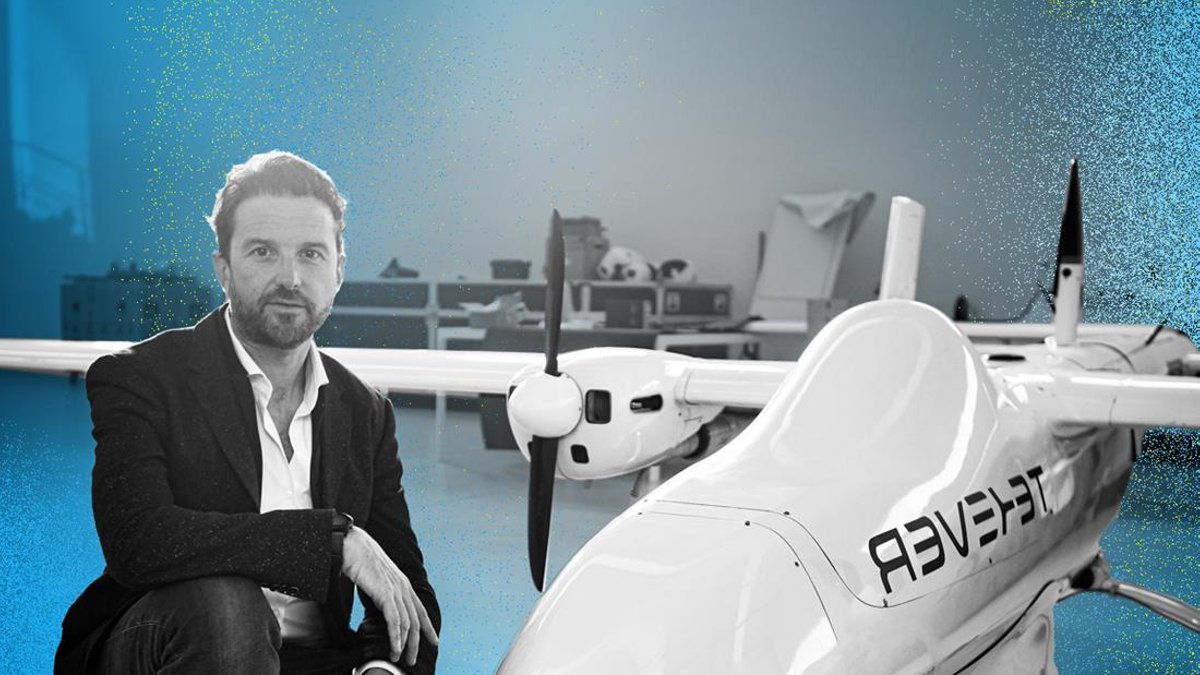
The European Space Agency’s Hera mission, set to launch in October 2024 and arrive at Dimorphos in December 2026, will study the crater left by DART and gather data on the asteroid’s composition. But behind the scenes, Tekever, a Portuguese aerospace and surveillance-as-a-service firm, is providing the critical inter-satellite communication network that will keep the three Hera spacecraft synchronized. Without it, the mission risks missing its narrow launch window—or worse, failing entirely.
Why timing is everything in asteroid defense
“It’s a very time-critical project,” says Ricardo Mendes, Tekever’s CEO. Launch windows for deep-space missions are rare and fleeting. If Hera misses its October 2024 window, the next opportunity won’t come for years. Mendes says, “You don’t get a do-over. If you don’t launch, you don’t reach the asteroid in time.”
Tekever’s role isn’t just about communication. It’s about ensuring the satellites can adapt in real time to an environment where delays aren’t an option. The company’s inter-satellite link technology, deployed in missions like Hera, must operate flawlessly, no reboots, no latency, no human intervention. “Nothing can fail,” Mendes says. “If that happens, the person dies.” The stakes aren’t hypothetical. A miscalculation in trajectory could mean the difference between a successful deflection and a missed opportunity when Earth’s next potential impactor is identified.
Yet building systems that can’t fail while also moving fast is the real challenge. Most aerospace firms approach missions with rigid, slow-moving processes, years of planning, layers of approval, and bureaucratic delays. Tekever operates differently. Its culture is built on agility at scale, a philosophy Mendes argues is the only way to keep pace with threats that demand immediate solutions.
Read Also: Former CEO explains Blockbuster’s true bankruptcy cause
A software-first approach to hardware problems
Tekever didn’t start in aerospace. Founded in 2001 by a group of friends, the company began by developing software for industries like energy and food service. But by the late 2000s, Mendes and his team saw an opportunity in defense and drones, a sector they believed was stuck in outdated thinking.
The traditional approach to drones, Mendes explains, was mechanical-first. “For example, someone would look at building a drone as, ‘okay, we’re going to build a plane, but smaller, and we’re going to throw some software into it to replace the pilot’.” Tekever flipped that model. “The vision was, okay, we’re going to build these things inside out, software first…And then, you know, we need to put wings around it because it needs to fly. But it’s that kind of thinking.” This mindset extended beyond drones. In surveillance and reconnaissance, the company applied the same principle: computing-driven solutions over hardware-centric ones.
That shift wasn’t just about technology. It was about speed. When Tekever entered the drone market, large defense contractors were still operating on five-year development cycles. Mendes saw no reason why it should take that long. “Why isn’t it five weeks?” he asks. The answer, he believed, lay in Moore’s Law—the observation that computing power doubles roughly every two years. If hardware and software could advance that fast, why couldn’t defense tech?
Most governments and defense agencies, however, move at a different pace. Procurement processes are slow, requirements are locked in for years, and innovation is stifled by bureaucracy. Last year, a group of Silicon Valley investors and defense tech founders warned the Pentagon that the U.S. risked falling behind in technological advancement because of these delays. Mendes’ response? Agility isn’t optional, it’s survival.
Tekever’s drones have already proven their worth in Ukraine’s war, where the company’s unmanned aerial vehicles are used for intelligence and reconnaissance. The conflict has exposed how rapidly warfare evolves, and how outdated traditional defense models can be. Mendes says, “The answer might not surprise you. The war in Ukraine validates the theory that even in the military world what the users actually need is agility.”
Read Also: Daniel Pink says breaks essential for motivation
The agility paradox: scaling without slowing down
Tekever’s structure reflects its bet on speed. Its culture is decentralized, with teams granted autonomy to make decisions while staying aligned with company goals. “You need autonomy and alignment,” Mendes says. “Without them, you can’t be agile.”
This structure isn’t just about efficiency. It’s about resilience. Mendes believes Tekever could pivot to an entirely new problem, say, a sudden shift in asteroid defense requirements, and deliver a viable product quickly. The key? People over technology. “In the beginning, it was all tech, tech, tech,” he says. “What I’ve learned is it’s all about the people behind the tech. Developing the people is the secret sauce.”
The Hera mission is a test case. If Tekever’s inter-satellite links work as planned, it won’t just be a success for asteroid defense, it’ll prove that agility can coexist with precision, even in the most high-stakes environments. For Mendes, that’s the real breakthrough: not just building systems that don’t fail, but building them fast enough to matter.
The next potential Dimorphos could be decades away. But the window to prepare is closing.

Former CEO explains Blockbuster's true bankruptcy cause


